Matt’s Forest river
Ronja, the Robber's DaughterMatt’s Forest river is both a guide to the scale and abundance of the wild and a recurring physical danger. Ronia first discovers its rushing rapids below Matt’s Mountain, learns to move warily along its slippery banks, and later shares a life beside it with Birk. Its waters support swimming, fishing, and the soundscape of their refuge, but the current also leads toward Greedy Falls, where a mistake would be fatal.
Landscape and First Discovery
The river enters Ronia’s understanding of the world as something she must see for herself. She had heard Matt and Lovis speak of it, but only when she saw the water rushing in wild rapids from deep under Matt’s Mountain did she understand what a river was. This encounter belongs to a larger awakening: Matt’s Fort and Matt’s Mountain, which had seemed vast, were not the whole world. The river’s movement makes that new scale tangible, and Ronia silently laughs in wonder at the existence of rivers at all.
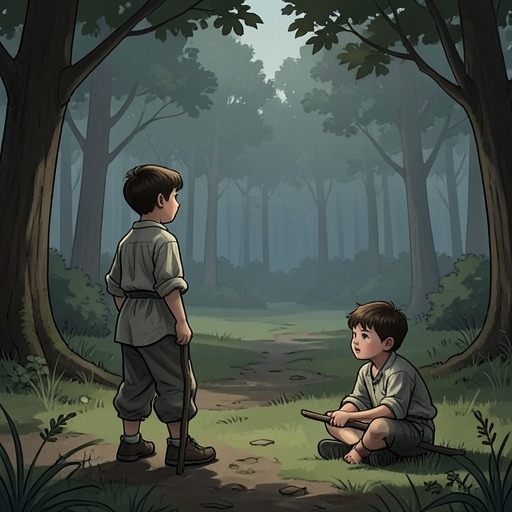
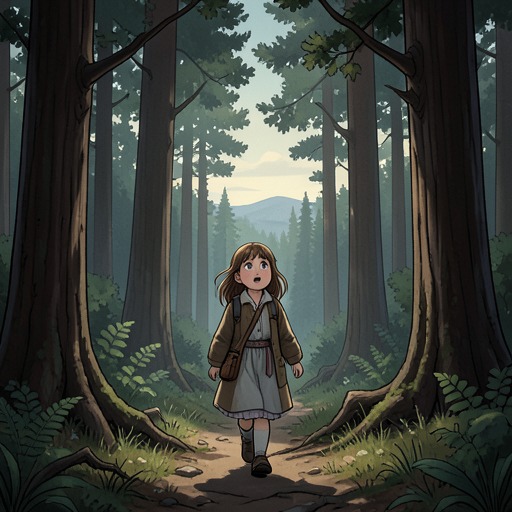
The river is closely joined to the forest in this discovery. Ronia follows a path into the woods and reaches the dark lake, where white water lilies catch her eye; she spends the day climbing mossy boulders and trees, throwing pinecones into the water and testing how they bob when she splashes. The river and its nearby waters are not merely scenery around her first independent explorations. They make the unfamiliar world legible through movement, play, and observation.
A School of Courage
Matt warns Ronia to take care not to fall into the river. She responds not by avoiding its banks altogether, but by practicing caution where the water rushes most fiercely. She hops, skips, and jumps over slippery stones, learning where the danger is greatest while keeping her attention on her footing. The river therefore becomes a practical measure of the difference between recklessness and courage: its risk is real, but knowledge and care let her approach it without surrendering to fear.
The waterfalls also give her a demanding route down Matt’s Mountain. The mountain falls sheer to the river, and the first time Ronia descends she is so frightened that she shuts her eyes. Gradually she learns where the crevices are, where her feet can rest, and where her toes must cling to keep her from pitching backward into the rushing water. Through repeated practice she becomes strong and agile, no longer afraid of falling in. Her hard-won familiarity with the river’s edge foreshadows the greater confidence she develops in the forest.
Home Above the Current
The river remains central when Ronia and Birk leave Matt’s Fort and choose the Bear’s Cave. The cave is high above the water, between two rocky cliffs, and can be reached only along a ledge that begins narrow and perilous before widening into a broad stone platform outside the entrance. From there they can watch the morning rise over mountains and forests while the river rushes below. A place associated with exposure and danger becomes their chosen shelter, and the current marks both the height and separation of their new home.
Their daily life makes the river a source of practical resources as well as a constant presence. They fetch water from a forest spring and lay a net in the river to catch fish. They carry flat stones from its edge to build a hearth on the platform, joining the river’s materials to the work of making the cave habitable. Later, when Ronia’s flour is gone and the last hard loaves have been baked on heated stones, the forest’s lakes and fish are among the alternatives that mean the two will not starve. Their survival depends on learning what the surrounding landscape can provide, not on treating the wilderness as an inexhaustible storehouse.
The river also gives their freedom a visible setting. After their first night in the cave, they sit beside their fire as the sun rises. The river rushes beneath them; the forest wakes around them, and an elk family appears at the far edge of the woods. They feel that the place is their kingdom, yet the scene’s living world exceeds human possession: river, forest, and animals are present together. The river’s course links the refuge to that wider community of life rather than making it a private domain.
Shared Waters and Seasonal Change
Spring beside the river is part of a broader scene of animals living without disturbance from the children. Blackbirds and cuckoos sing, fox cubs play near their den, squirrels move through the treetops, and hares cross the moss. A pregnant snake rests in the sun close by; neither the children nor the snake disturbs the other. The riverbank setting belongs to this spring abundance, which prompts Ronia to reconsider the idea that the woods—or their horses—belong to her. The natural world is not arranged for human use alone.
In summer, the river becomes a place of play and a boundary to respect. Ronia and Birk bathe in its cold water during the midday heat, swimming and diving like otters and letting the current carry them downstream. They know when its force is becoming dangerous: the roar of Greedy Falls grows louder, and Greedy Hump marks the point at which the hazard is immediate. The river’s pleasures and its mortal risk are inseparable. Their knowledge of where to stop allows them to enjoy the current without mistaking familiarity for safety.
As seasons turn, the river continues to shape life around the Bear’s Cave. When autumn arrives with the lamenting songs of the Unearthly Ones, persistent rain keeps Ronia and Birk inside for days. The platform outside is soaked, the fire will not stay alight, and cold finally drives them out to run in the forest, only to return wet and wring out their clothes. The river is not described as causing the rain, but the waterlogged landscape and the loss of comfortable outdoor life sharpen the seasonal change. Across Ronia’s years in the forest, the river remains at once a wonder, a teacher, a resource, a boundary, and a danger that demands respect.